
Helping you Navigate Medicare with Confidence
Providing Independent Life & Health Guidance for Indiana, Ohio & more.

Who We Are
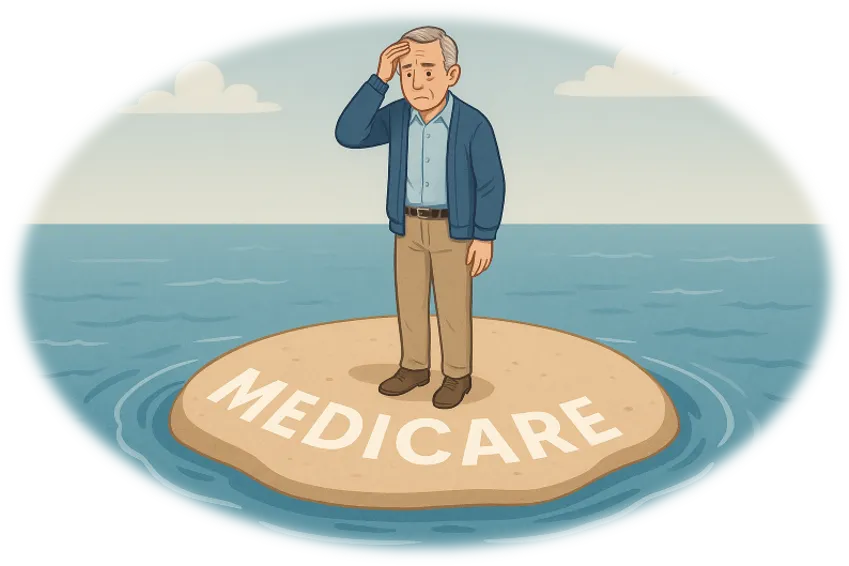
Don't Be This Guy
Based in Richmond Indiana, we serve the the local community and surounding states. Licensed in Life and Health Insurance, and AHIP Medicare Certified so we can help you with all things Medicare.
Whether you're under 65, turning 65, retiring or simply wanting to look at all of your options, we're here to help you every step of the way.

How We Help
You don't have to figure it out alone.
With the right advisor, even Medicare becomes manageable.
At Life and Health Advisors, we help individuals and families understand their options, compare plans, and enroll with confidence-without the pressure of sales tactics or confusing language. As a trusted local advisor, we're committed to making insurance simple, personal, and truly helpful.

Medicare Retirement Planning & Reviews

Under 65 Health Insurance

Life Insurance

Dental & Vision
Hospital Indemnity
Accident Protection
TESTIMONIALS
What others are saying

"Loved everything so far"
"I highly recommend Brian for all your Medicare and supplemental insurance. I spent three days researching for supplemental dental insurance. I felt like I was getting nowhere. I then called on Brian to help me find a plan for my situation. He is very knowledgeable and informative of the way each plan works. Brian's expertise got me a great plan! Thank you so much, Brian!" - Sandy

"My life changed forever"
"Brian was very informative, patent with our questions and answered them thoroughly. He gave us the available options and explained them to usso we could make an informed decision. Thanks Brian!"
- Mark
"Highly recommend this"
"Brian is personable, knowledgeable and makes Medicare planning understandable and a little less intimidating. Highly recommend him!"
- Shelly

Why Life & Health Advisors?
Frequently Asked Questions
Medicare can feel overwhelming — especially when you're approaching 65 or helping a loved one navigate their options. Here are the questions I hear most often, answered plainly and honestly.
When should I sign up for Medicare?
Most people should sign up for Medicare when they turn 65 — specifically during your Initial Enrollment Period (IEP), which is a 7-month window that starts 3 months before your 65th birthday month and ends 3 months after.
If you're still working at 65 and have employer coverage through a company with 20 or more employees, you may be able to delay Medicare without penalty. However, if your employer has fewer than 20 employees, Medicare becomes your primary coverage at 65 and delaying could be costly.
Missing your enrollment window without a qualifying reason can result in a permanent late enrollment penalty on your Part B and Part D premiums — for as long as you have Medicare.
Brian's tip: Don't wait until your birthday month to start planning. Call me 3–6 months before you turn 65 so we can map out the right timing for your situation — it's free and takes about 20 minutes.
Is Original Medicare Parts A & B all I need?
For many people, the honest answer is no — and the biggest reason comes down to one thing: Original Medicare has no out-of-pocket maximum.
With Original Medicare (Parts A and B), there is no cap on what you could owe in a given year. If you have a serious illness, major surgery, or a long hospital stay, your costs can stack up quickly with no ceiling. Part A has a deductible of $1,676 per benefit period in 2026 — and if you're readmitted, that resets. Part B covers 80% of approved costs, leaving you responsible for the remaining 20% with no limit.
That's why most people on Original Medicare add either a Medicare Supplement (Medigap) plan to cover those gaps, or enroll in a Medicare Advantage plan that bundles coverage with an annual out-of-pocket maximum. Without one of those, a single serious health event could cost you tens of thousands of dollars out of pocket.
Original Medicare also does not include prescription drug coverage. You'd need to add a separate Part D plan to cover your medications.
Brian's tip: I've seen clients get blindsided by a hospital bill they never expected because they assumed Medicare covered everything. A 20-minute conversation with me can close those gaps before they become a crisis.
What's the difference between Medicare Advantage and Medicare Supplements ?
This is one of the most important decisions you'll make in Medicare — and it's one most people don't fully understand until they're already enrolled.
Medicare Advantage (Part C) replaces Original Medicare. You get your hospital, medical, and usually drug coverage through a private insurance company. These plans often have low or $0 monthly premiums and may include extras like dental, vision, and hearing. The trade-off: you're working within a provider network, and you have copays and cost-sharing when you use services. There is an annual out-of-pocket maximum, which protects you from catastrophic costs.
Medicare Supplement (Medigap) works alongside Original Medicare — it doesn't replace it. You keep the full freedom of Original Medicare (any doctor, any hospital that accepts Medicare, nationwide) and your Supplement plan pays most or all of the costs that Medicare doesn't cover. Depending on the plan you choose, you could have little to no out-of-pocket costs when you receive care. The trade-off: Medigap plans carry a higher monthly premium, and they do not include drug coverage — you'd add a separate Part D plan.
In short: Medicare Advantage tends to work well for healthier individuals who want low premiums and are comfortable with a network. Medicare Supplement tends to work well for people who want predictability, see specialists frequently, or travel often.
Brian's tip: There's no universally "right" answer here — it depends on your health, your budget, your doctors, and your medications. I run a side-by-side comparison for every client at no cost before recommending anything.
Does Medicare cover prescription drugs?
Original Medicare (Parts A and B) does not cover most prescription drugs you take at home. To get drug coverage, you need either a standalone Part D plan (added to Original Medicare) or a Medicare Advantage plan that includes drug coverage built in.
In 2026, the biggest change to know: the out-of-pocket maximum for Part D is now $2,100 per year — a dramatic improvement from previous years. Once you hit that cap, your prescriptions are covered at 100% for the rest of the year.
There's also a new Medicare Prescription Payment Plan (M3P) that lets you spread your drug costs across monthly installments rather than paying a large amount early in the year.
Brian's tip: Never go without Part D coverage if you're on Medicare — even if you take no medications today. Skipping it can result in a permanent penalty when you eventually do need it.
How much does Medicare cost?
Medicare costs depend on which parts you have and your income. Here's a plain-language breakdown for 2026:
Part A (hospital): Free for most people who worked and paid Medicare taxes for at least 10 years.
Part B (medical): The standard premium is $185/month in 2026. If your income is above certain thresholds (known as IRMAA), you'll pay more — sometimes significantly more.
Part D (drugs): Varies by plan, but many standalone plans start under $30/month. Your cost also depends on income (IRMAA applies here too).
Medicare Advantage: Many plans have $0 premiums, but you still pay your Part B premium. You'll have copays and cost-sharing when you use services.
Brian's tip: If your income changed recently due to retirement, divorce, or death of a spouse, you may be able to appeal an IRMAA surcharge and have it reduced. I help clients do this regularly — at no charge.
I'm working past 65 - do I have to sign up for Medicare?
It depends — and getting this wrong can cost you. The answer hinges on two things: how many employees your employer has and whether your coverage comes from your own job or a spouse's.
If your employer has 20 or more employees: Your group health plan is considered your primary coverage. You can delay enrolling in Medicare Part B without penalty. Most people in this situation still enroll in Part A (hospital) at 65 since it's typically free — it won't interfere with your employer plan and gives you a backup layer of coverage.
If your employer has fewer than 20 employees: Medicare becomes your primary payer at 65, even if you're still working and have employer coverage. If you delay Part B in this situation, your employer plan may pay as if Medicare is already in place — leaving you with unexpected gaps and bills.
COBRA and marketplace plans do not count as qualifying employer coverage for the purposes of delaying Medicare. If you're on either of those at 65, you need to enroll in Medicare on time or face permanent penalties.
When you eventually retire or lose your employer coverage, you'll qualify for a Special Enrollment Period (SEP) — an 8-month window to sign up for Medicare without penalty.
Important: HSA contributions must stop at least 6 months before you enroll in Medicare Part A. If you're still contributing to an HSA past age 65, coordinate carefully — retroactive Part A enrollment can trigger an IRS penalty on those contributions.
Brian's tip: This is one of the most common and costly mistakes I see — someone assumes their employer plan protects them from Medicare deadlines, but the size of the employer changes everything. Call me before you turn 65 and we'll map it out together at no charge.
Get Started
Schedule a Consultation
Let’s create a personalized Medicare plan that puts your mind at ease — starting today.
OTHER INFO
Independent Licensed Agent, License #1478750, AHIP Certified
Indiana, Ohio, Michigan, Kentucky, Illinois, Florida & more
"We do not offer every plan available in your area. Currently we offer 9 plans with over 94 products in your area. Please contact Medicare.gov or 1–800–MEDICARE to get information on all of your options."
© 2026
All Rights Reserved | Brian Benedictagraph Font
COMPANY
LEGAL
SOCIALS
Copyright 2026. Brian Benedict's Account. All Rights Reserved.